
Why We Stopped Doing Santa — and What We Do Instead

This is one of those topics I’ve sat with for a long time.
Not because it’s controversial, but because it requires care. This isn’t a parenting rule, a theological stance, or a “right way” to do Christmas. It’s simply the story of how my own spiritual history shaped a conviction in our home — and how that conviction led us to something unexpectedly beautiful.
For years, I avoided writing this because I never want to sound condemning, self-righteous, or dramatic about something that many families navigate thoughtfully and lovingly. So let me say this clearly from the start: this is not about what other families should do. This is about what we felt called to do — and why.
The Childhood Memory That Followed Me Into Adulthood
I didn’t grow up with a clear understanding of who God really is or what prayer actually means. As a child, I remember praying to Santa — earnestly, sincerely — asking for the gifts I hoped would be waiting for me on Christmas morning.
And when I did, I felt something. Excitement. Anticipation. Butterflies. Warmth.
As a little girl, I didn’t know how to differentiate emotion from something spiritual. So those feelings stayed filed away in my mind as evidence that “spiritual experiences” were just emotional responses.
Years later, when I walked away from the religion I was raised in, I walked away from everything that looked like Christianity altogether. For the next fifteen years, I was an atheist — outspoken, skeptical, and confident that anything people attributed to God or the Holy Spirit was just emotional hype.
And embarrassingly, I used those Santa memories as proof.
I felt the same way praying to Santa, I would think. So how real can spiritual experiences actually be?
I had no idea how spiritually confused I was.
Meeting Jesus — and Meeting the Real Holy Spirit
When Jesus saved me at 35, everything changed.
Encountering the real Holy Spirit wasn’t subtle or manufactured or emotional in the way I’d always assumed spiritual experiences were. It was holy. Grounded. Powerful. Other-worldly. And unmistakably not something I could conjure up on my own.
With that came clarity — and conviction.
I realized how much I had misunderstood, misinterpreted, and even mocked in my years away from God. I repented of the things I’d said and believed, and I became deeply aware of how easily emotion can masquerade as truth when we don’t know the difference.
That clarity didn’t just affect my faith. It changed how I thought about everything — including how I wanted to raise my kids.
The Conviction That Made Santa No Longer Work for Us
Once I became a follower of Jesus, I started paying attention to language. To belief. To trust.
And something about Santa suddenly didn’t sit right with me anymore.
Not because Santa is “evil.”
Not because Christmas needs to be stripped of joy.
Not because I wanted to be the anti-fun Christian mom.
But because I couldn’t reconcile one thing:
I couldn’t tell my kids to believe in something imaginary — and then ask them to trust me when I told them God is real.
The language overlaps too much.
The structure of belief is too similar.
And given my own history of spiritual confusion, I knew I couldn’t blur that line in our home.
I also realized something else about myself: I’ve never been good at creating counterfeit “magic.” Once I know something isn’t true, I can’t convincingly sell it — not to myself, and definitely not to my kids.
So we let Santa go.
Not out of fear.
Not out of legalism.
Not out of judgment.
But out of clarity and honesty.

What We Do Instead: St. Nicholas Day
Letting go of Santa didn’t mean letting go of joy, tradition, or celebration.
Instead, we leaned into something that felt historically grounded, meaningful, and still fun: St. Nicholas Day, celebrated on December 7th.
We read Saint Nicholas: The Real Story of the Christmas Legend by Julie Stiegemeyer — a book that introduces kids to the real St. Nicholas: a generous, faithful man who followed Jesus and gave quietly to those in need.
When I first read it to my oldest son, Benson (he had just turned six or seven at the time), he paused and asked, very plainly:
“Does this mean Santa isn’t real?”
I asked him back, “Do you think there’s really a man with flying reindeer who lives at the North Pole and comes into people’s houses at night?”
He thought for a moment and said, “No.”
So I told him, as simply as I could: “Jesus is real. Santa is just a fun story. God does real miracles, and I want you to know the real thing — not a pretend version.”
He understood immediately.
Kids are often more discerning than we give them credit for.
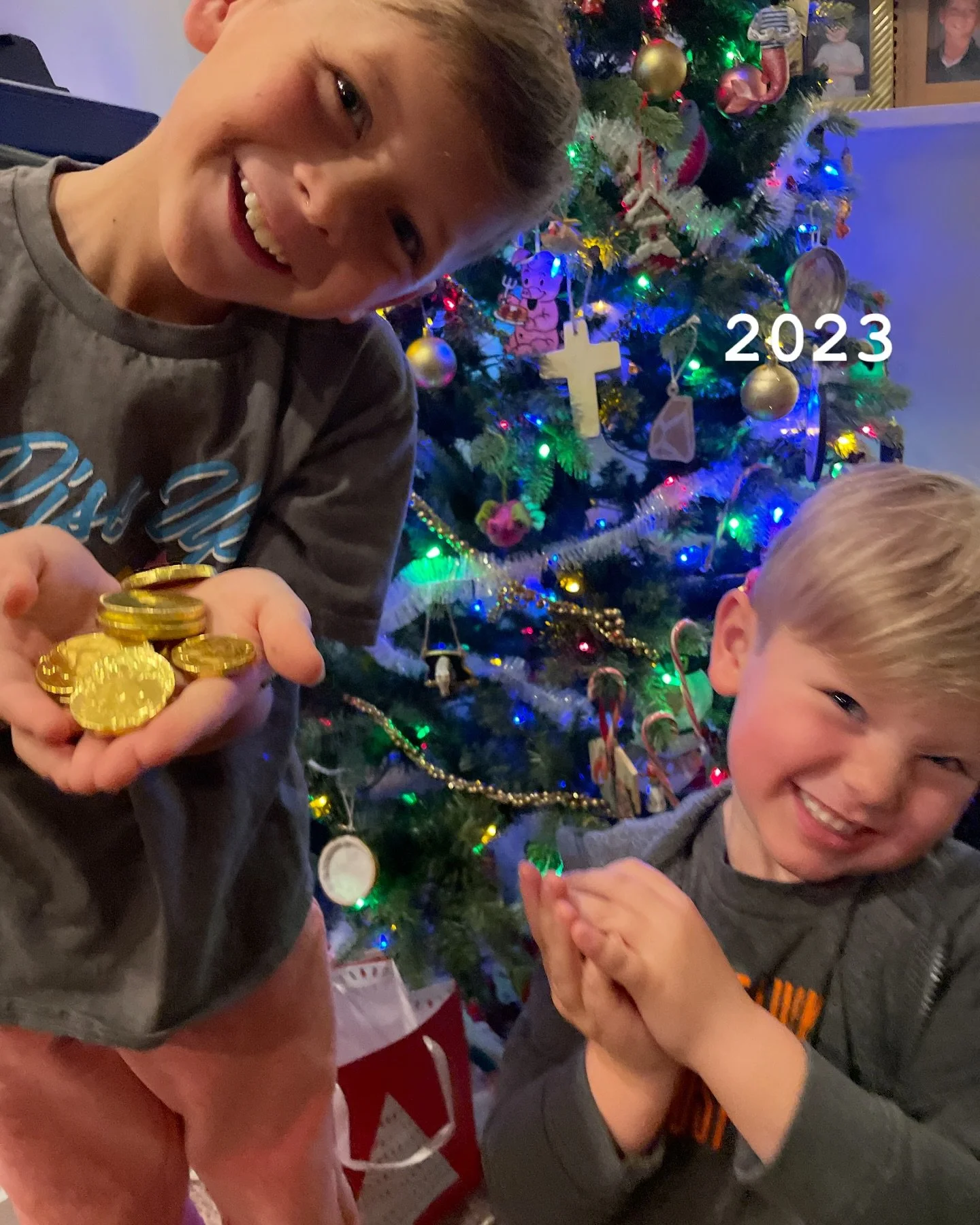
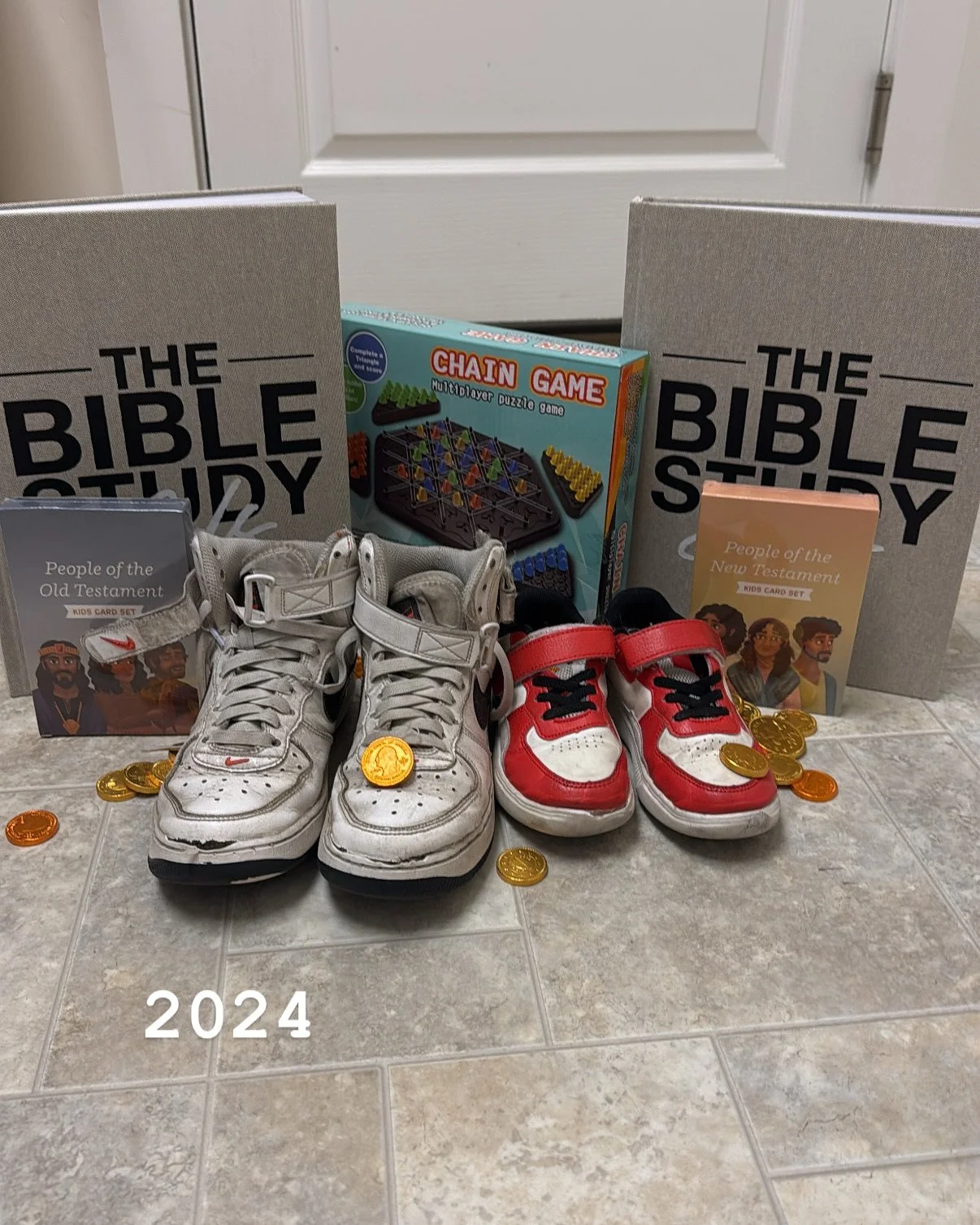
Now, every December 7th, the boys put their shoes by the door. We fill them with chocolate coins and a few small gifts — usually something meaningful we can enjoy as a family. We talk about generosity, secret giving, humility, and joy that doesn’t come from being “naughty or nice,” but from love.
It’s sweet. It’s grounding. And it sets the tone for the rest of the season.


Christmas Still Feels Magical — Just Differently
One thing I want to be very clear about: our Christmas is not less joyful. If anything, it’s more peaceful.
We still decorate a tree.
We still do stockings.
We still arrange gifts to wake up to on Christmas morning.
The only difference is that our kids know exactly where the gifts come from — and we thank God together for His provision.
There’s no pressure to keep a story straight.
No threats tied to behavior.
No confusion about who deserves credit.
Just gratitude, celebration, and clarity.
This Is Our Story — Not a Prescription
I share this knowing full well that many faithful, thoughtful Christian families still choose to celebrate Santa. I’m not here to shame, persuade, or debate.
This is simply the story of how my past shaped our present, and how one conviction — rooted in clarity, not fear — reshaped our December in a way that feels deeply aligned with our faith.
If you’ve ever wrestled with how to balance tradition, truth, and joy… you’re not alone. And if you land somewhere different than we did, that doesn’t make you wrong.
For us, though, this was the right choice.

